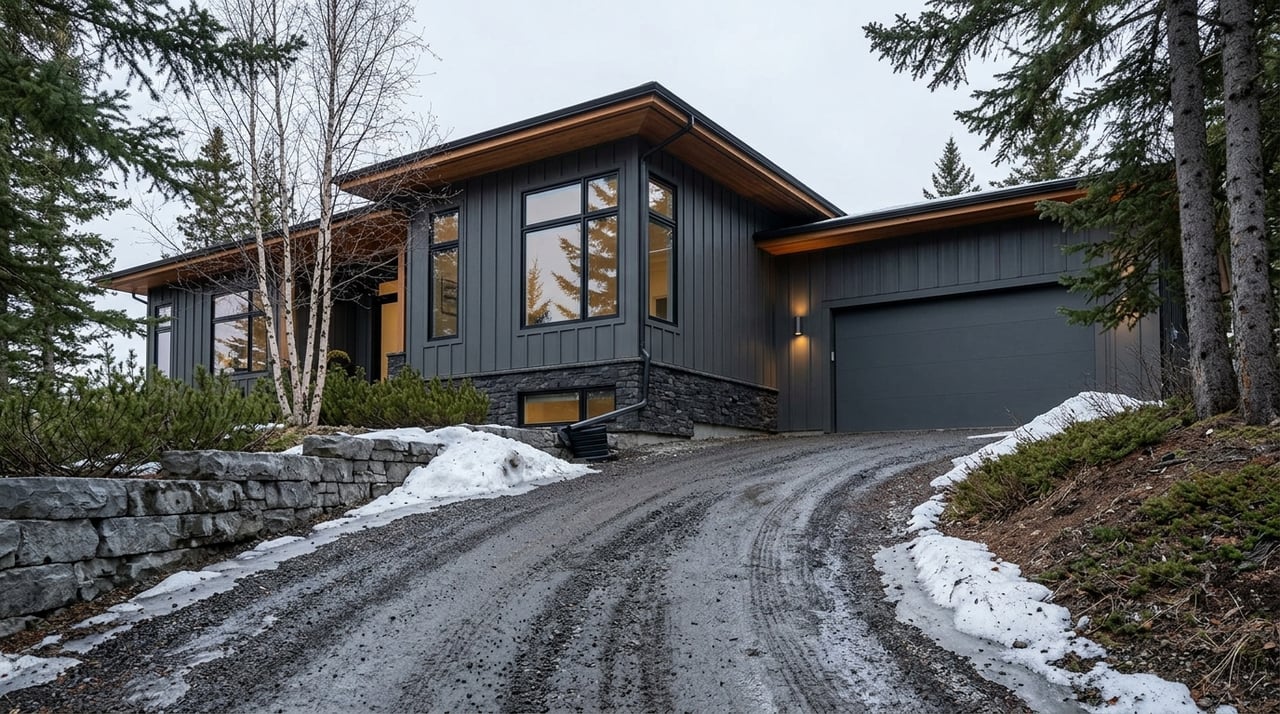
What if the biggest pricing mistake for your Mid-Hillside home is comparing it to the rest of Anchorage? If you are getting ready to sell, it is easy to look at citywide numbers and assume they tell the story. In Mid-Hillside, they usually do not. This market moves in its own lane, and the right price depends on a much tighter set of factors. Let’s dive in.
Mid-Hillside Is Its Own Market
If you price a Mid-Hillside home like a typical Anchorage property, you can miss the mark in either direction. Redfin’s March 2026 data shows a Mid-Hillside median sale price of $749,750, compared with $410,000 for Anchorage overall. That means Mid-Hillside’s median sale price was about 83% higher than the citywide median.
The pace of the market is different too. Redfin reported 34 days on market and 8 homes sold in Mid-Hillside, while Anchorage overall had 13 days on market and 207 homes sold. Realtor.com’s March 2026 view for Mid-Hillside showed 12 homes for sale, a $775,000 median listing price, and 39 days of median market time.
Those numbers may vary by source, but the message is consistent. Mid-Hillside is a thin, higher-price micro-market where broad Anchorage averages are too blunt to guide a smart list price.
Why Generic Anchorage Comps Fall Short
A hillside home is not just a house with a Mid-Hillside address. Buyers in this area tend to weigh things like view orientation, lot shape, slope, privacy, garage function, and road access right alongside square footage and finishes.
Alaska’s property assessment guidance supports that approach. It notes that value is influenced by physical characteristics like land size, improvement size, bedrooms, bathrooms, garages, and amenities, while also recognizing location and even nonphysical factors such as easements. For sellers, that means your pricing conversation should look beyond countertops and paint colors.
In Mid-Hillside, two homes with similar interior size can land at very different prices if one has stronger views, more usable land, easier winter access, or better parking. That is why the nearest and most comparable hillside sales matter far more than a citywide average.
What Drives Value on the Hillside
View Quality Matters
Not all views carry the same value. Buyers often distinguish between partial views, open views, and unobstructed views, and they may also react differently to city-light views, inlet frontage, bluff frontage, or a more private natural setting.
Recent hillside sales help show how much setting can matter. At 5596 Dalzell Cir, the home sold for $899,900 after 12 days on market. It included peek-a-boo Chugach Range views, a deck, vaulted ceilings, and a sauna on a 0.92-acre lot.
At 10607 Aletha’s Mountain Way, the home sold for $1.2 million after 79 days on market. It offered unobstructed views, city-lights views, bluff frontage, inlet frontage, and a 3-car attached garage on 1.09 acres. Those details help explain why one hillside property can justify a major premium over another.
Lot Utility Counts
A larger lot does not always mean a more valuable lot. On the hillside, buyers often care about whether the land is actually usable, how steep the site feels, and how well the home sits on the property.
Usable outdoor space, practical parking, and a layout that makes the site feel functional can all support value. If the lot is steep or harder to use, buyers may factor that into what they are willing to pay.
Garage and Parking Function Matter
Garage capacity can be more than a convenience in Anchorage. Alaska’s property guidance lists garages as a key value characteristic, and recent sales show that buyers do pay attention to how parking works in daily life.
A roomy attached garage, sensible turnaround space, and parking that feels easy in winter can strengthen your price position. On the other hand, limited parking or awkward site access may narrow your buyer pool.
Condition and Features Support Value
Custom features can absolutely help your home stand out, but they work best when the overall package is strong. In recent hillside examples, details like vaulted ceilings, decks, saunas, mud rooms, and updated finishes were part of the value story.
Still, these features rarely override a weaker setting. In Mid-Hillside, buyers usually see condition and amenities as part of a bigger picture that includes location, usability, and access.
Why Price Per Square Foot Can Mislead
Many sellers want a simple number to start with. Price per square foot can be a useful screening tool, but in a custom hillside market, it is not a pricing model by itself.
Redfin’s Mid-Hillside data shows a median sale price per square foot of $219. But the recent Dalzell sale came in at about $310 per square foot, while the Aletha’s Mountain Way sale was about $275 per square foot.
That spread is a good reminder that buyers are not valuing square footage alone. They are valuing the full package, including views, lot quality, privacy, and access.
Winter Access Can Change the Price Story
In Mid-Hillside, access is not a side issue. It can be a pricing issue.
The Municipality of Anchorage says Limited Road Service Areas, or LRSAs, provide limited road maintenance for rural roads on the Anchorage hillside, with 21 hillside service areas in place. The listed work can include summer grading, pothole repair, drainage-ditch clearing, dust control, snow removal, and ice control.
At the same time, Anchorage Street Maintenance states that driveway snow removal is the property owner’s responsibility. The municipality also notes that snow cannot be shoveled or plowed into the street right-of-way or onto sidewalks.
For buyers, that means a steep driveway, long private approach, or tricky winter turnaround is not just an inconvenience. It is part of the ownership experience. If access feels difficult, some buyers may discount what they are willing to pay, even if the view is excellent.
Use the Right Price Anchors
A strong pricing strategy for Mid-Hillside starts with the closest and most similar sales, not the broadest ones. You want to compare your home to properties with similar view quality, lot utility, access profile, age, condition, and parking function.
Off-hillside sales can still offer context, but they should not lead the pricing discussion. For example, Turnagain sales like 4041 Woronzof Dr at $440,000 and 2831 Bennett Ave at $645,000 show the broader price ranges buyers may consider elsewhere in Anchorage. They are useful benchmarks, but they are not direct substitutes for a Mid-Hillside comp set.
That distinction matters because your buyer may compare neighborhoods, but your list price still needs to reflect what a closely matched hillside home is likely to command. The more unique your setting, the more important those narrow comp adjustments become.
Should You Use Your Tax Assessment?
Your assessment can be one data point, but it should not be the main method for setting list price. Alaska’s guidance explains that assessed value is based on property characteristics and comparable sales, and it encourages owners to compare similar neighborhood properties.
That same guidance also notes that errors in the property record, such as square footage, garage count, bathrooms, or condition, can affect value. If your record is inaccurate, the assessment may not fully reflect your home as it actually exists in the market.
For a Mid-Hillside seller, recent comparable sales are usually more useful than a tax figure. The goal is to understand what buyers are responding to right now in your specific pocket of the hillside.
What Sellers Should Highlight
When you talk through pricing, focus on the details that buyers are likely to notice and compare:
- Recent sold homes in the same Mid-Hillside pocket
- Exact view quality, whether partial, open, or unobstructed
- Lot usability, including slope and functional outdoor space
- Garage size, parking layout, and turnaround ease
- Road-service pattern and winter access realities
- Condition, updates, and custom features that support the setting
These are the details that help explain why one hillside home commands a premium and another sits longer or requires a price adjustment.
Pricing for Today’s Mid-Hillside Market
The best way to price your Mid-Hillside home is to treat it like the niche property it is. Citywide averages can provide background, but they should not drive your strategy. The homes that sell well in this market are usually priced with a close eye on hillside-specific comps, not broad Anchorage numbers.
If your home offers a protected view, a well-positioned lot, practical winter access, and strong overall presentation, those strengths can support a premium. If there are tradeoffs, the right pricing strategy should account for them early so you can attract serious buyers instead of chasing the market later.
When you want local guidance backed by neighborhood-level knowledge and polished listing marketing, RE/MAX Dynamic Properties can help you evaluate your home through the lens of the Mid-Hillside market and position it for a stronger sale.
FAQs
How should you price a home in Mid-Hillside, Anchorage?
- Start with recent sold homes in the same hillside pocket and adjust for view quality, lot usability, access, garage function, and condition rather than relying on Anchorage-wide averages.
Does price per square foot work for Mid-Hillside homes?
- It can help as a starting screen, but Mid-Hillside pricing varies widely because buyers also weigh views, land, privacy, and winter access.
Does winter access affect Mid-Hillside home value?
- Yes. Road service, driveway steepness, snow removal responsibilities, and ease of getting in and out during winter can affect buyer demand and pricing.
Should you use tax assessment to price a Mid-Hillside home?
- It can be one reference point, but it should not be the primary pricing method because recent comparable sales usually reflect current buyer behavior more accurately.
What features add value to a Mid-Hillside home in Anchorage?
- Buyers often respond to strong views, usable lots, practical garages and parking, appealing outdoor spaces, and custom features that fit the setting.